

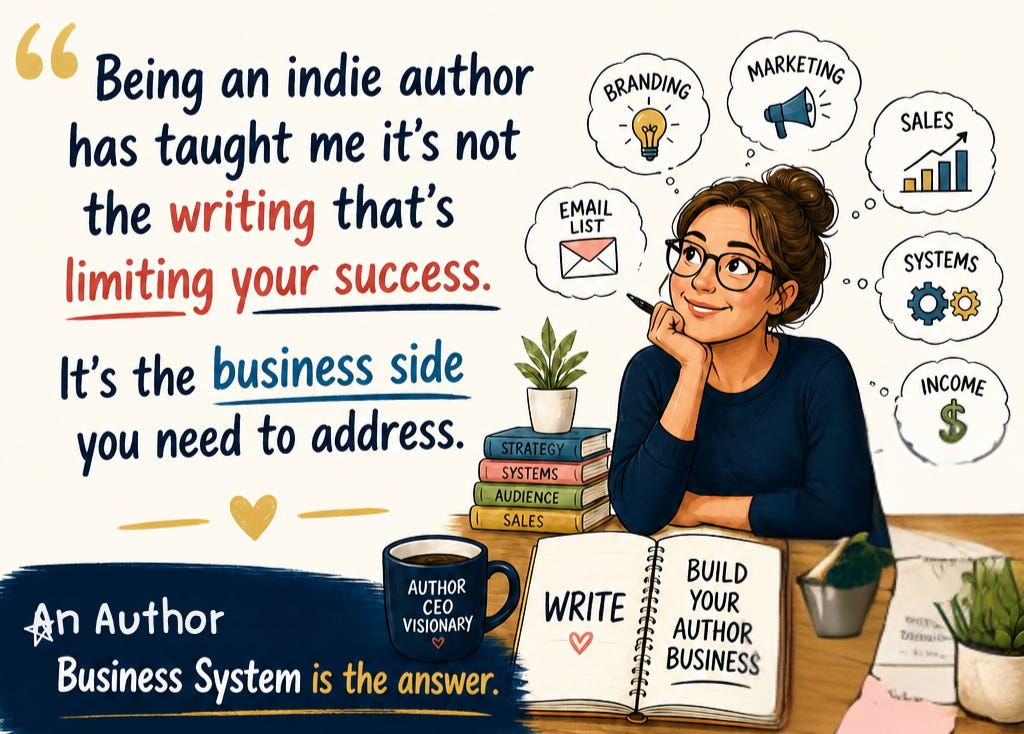
The Misdiagnosis
Many writers are trapped in a cycle of creative doubt. They spend thousands of hours and dollars honing their writing craft, attending prestigious workshops and obsessing over word choice and sentence construction. Their sales, however, remain stagnant and their audience non-existent. When a launch fails, when the backlist languishes, these writers engage in a fatal misdiagnosis: they assume the writing wasn’t good enough. And repeated “failure” only reinforces this belief.
So these poor souls return to scouring the internet for another writing workshop—all in the hope that if they could just “hone their craft” success would be theirs.
Meanwhile, “poorly written” novels are earning for their writers. (I put this in quotes because I refuse to judge any writer’s honest attempt at putting words to paper. It isn’t easy. And for the general reading populace, a good story outweighs beautiful prose.)
Does any of this sound familiar? It certainly does to me. The rejection letters. The lack of sales. Just proof of my incompetence as a writer. I believed I could learn my way out of this problem. My bookshelves hold rows and rows of writing craft books, attesting to this. And I can’t leave out all the workshops by well-known writers I’ve taken over the years. Did any of these ever improve my writing? Some.
These writers fail to diagnose the real culprit for their lack of success. Until indie publishing took hold in the last twenty years, writers didn’t have a lot of control over this one thing: the ability to manage all levers of their author business. In the old days of traditional publishing, writers could only control their craft. Hence, the fixation with perfecting one’s writing. Now writers find themselves a one-person publishing house, producing a new set of problems for writers.
The Strategy
In 2021, I switched writing paths, choosing to go indie. There, I witnessed something that challenged the idea that poor writing was the root of my problem. Quantity, not quality, now stood as the most important factor in whether an author could make money as a writer. The production of multiple books in a year, one right after the other, separated by only a couple of months, is known as rapid release. And writers who could do this were earning anywhere from the low five figures to seven.
The release of a new book in a series satisfies the reading demands of a writer’s current audience, but it also attracts new readers, inviting them into the series’ world. This spurs backlist sales, and it’s where the money is being made. The more books in the backlist, the greater the payout.
The Author Avalanche
But readers can’t buy books they don’t know about. Discoverability requires a whole new set of tools. Writers now find themselves in a position they never expected to find themselves in: responsible for everything, from operations to book production to marketing to reader community building.
Their dreams of being a writer in the traditional sense—release parties and book signings—have been replaced by daily social media posting to six different platforms and email list building. Indie writers are also responsible for book production and distribution across multiple platforms Accounting. Metadata collation. Newsletters. Blogs. The genteel life of a writer has now been replaced by a one-person small business owner who is overworked and overwhelmed
For me, I stopped seeing my writing as the culprit to my mediocre success. Instead, the problem has become much larger: a systemic lack of business infrastructure. To survive in a saturated market, which now includes traditional and indie published books, a writer needs to understand that a book is not just a creative expression; it is the center of a professional enterprise. Success is not found in the next draft, but in the implementation of strategic systems that transform an anonymous manuscript into a recognizable brand. This is the path to discoverability.
The New Diagnosis
Unfortunately the current structure of an indie author business results in the author avalanche. Separate plans and calendars for email list building, promotion, newsletters, along with plans and calendars for all the social media platforms—Instagram, Meta, TikTok, Threads, Youtube, Pinterest—keeps writers from their number one priority: writing. And this interferes with the rapid release strategy.
What writers need is an author business structure that controls and manages the business of writing and eliminates, or at least alleviates, the author avalanche. Paradigm shifts need to be made in how writers handle the structural components of an author business, especially communications, marketing, and building a reader community.
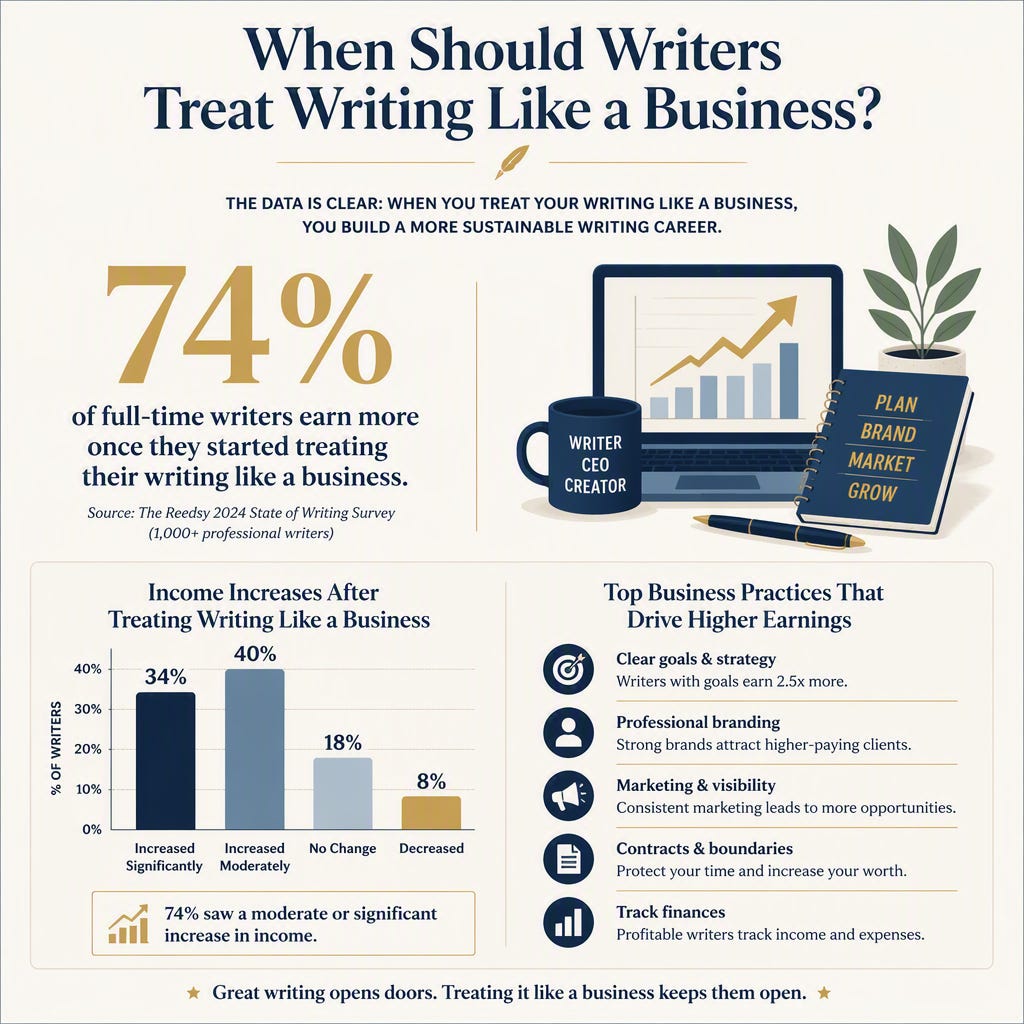
“Honing my writing craft” has turned into “building a better author business,” not an easy feat. A particular mindset and way of conducting author business had been adopted from social media content creators, whose sole job is to create content for the internet. A writer’s focus, however, is to produce books, and mimicking content creators meant we were now wearing two hats. And this was how the author avalanche was born. On a frustrated November afternoon, I made it my mission to find a better way. It took several months, but I did exactly what I set out to do. I restructured my author business and made the paradigm shifts that lessened my work load, increased my writing time, and saw the start of a modest increase in my sales.
If you’re interested in building a better author business, check out the program I created, the CEO Author Business System at https://www.skool.com/ceo-author-business-system-4759/about. The first two modules are free for you to try out. And unlike other courses, this one is a Pay-per-Module plan.
So no, you don’t need another writing workshop. What you need is an author business system.